Fujifilm XPro-3

I was kindly lent a XPro 3 by Fujifilm [through Hire a Camera] for two days during the current lockdown due to Coronavirus, I thought I’d cover a camera system I’ve wanted for sometime. This piece is more about my thoughts on a rather divisive camera opposed to a specs sheet.

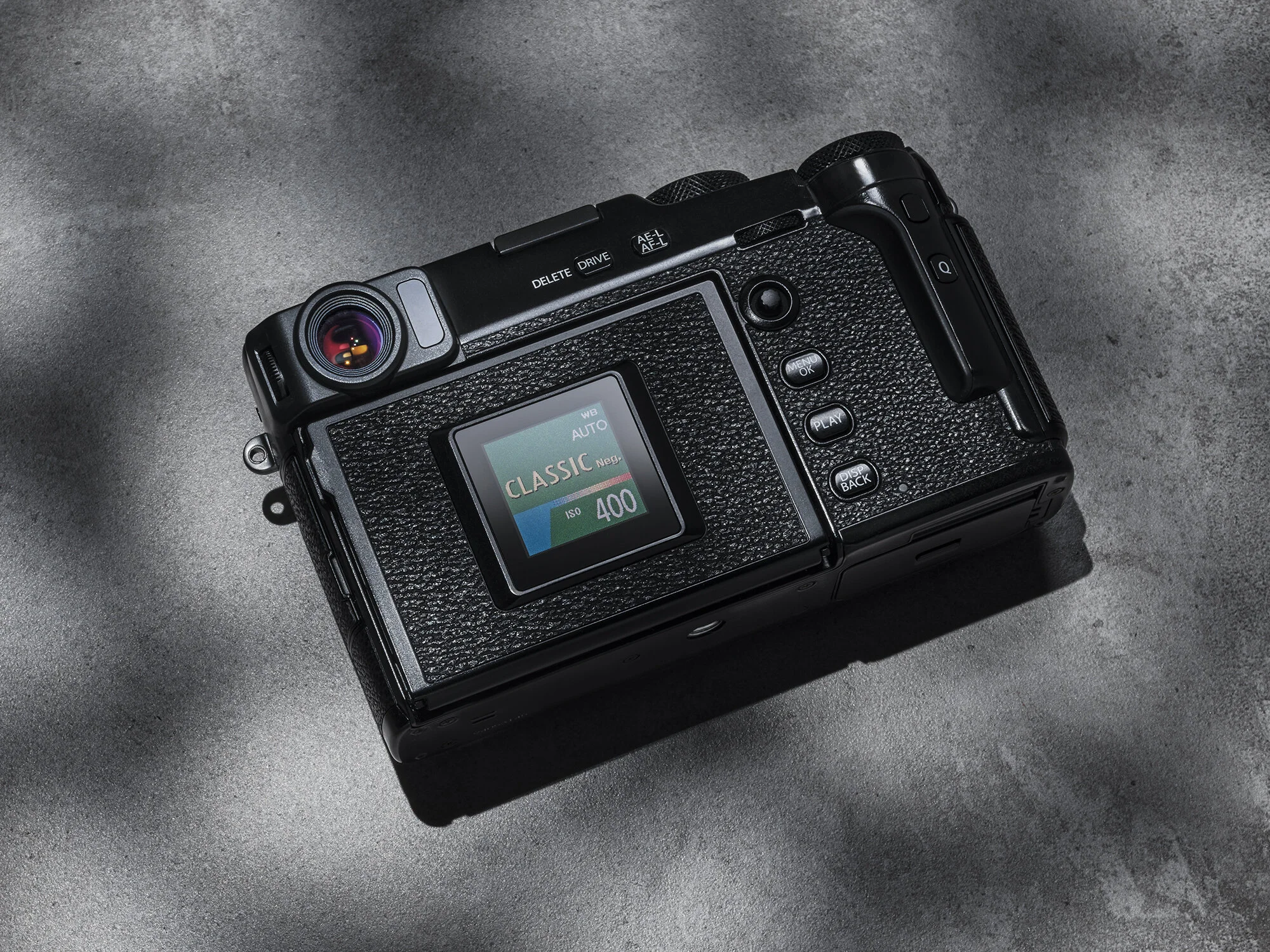
The big talking about this is the screen, and that it’s hidden. This is a huge problem for many owners of the XPro 2, as you will see comments on FujiRumours & Youtube going off about this design.

When I first tried the XPro-3 at Fujifilm SQ in Tokyo, I liked the concept of this design and getting my hands on it again and handling it, I really wasn’t sure how I felt about it.
2020_04_18_XPro_3_Shot_01_0104_EDIT copy.jpg

When I did eventually get outside on my daily walk to test the camera. I actually didn’t find the lack [hidden] LCD a problem at all. I kinda enjoyed it. Sitting at my desk the day before, flipping the screen back and forth, seeing how it would be used in an everyday scenario, my thoughts were ‘this is going to be so cumbersome to use’.

But actually using it for an hour, I don’t have any qualms about the hidden screen.

I guess I shoot this system how I’d shoot my X100T, mostly using the EVF for 90% of the operation. When shooting with my X100T I often view images and menu through the EVF as I feel you get a better screen through the EVF in bright sunlight, no glare etc... Even on my GFX, If I wish to show someone a photo, I’d suggest they look through the EVF opposed to the rare LCD.

I like the idea of having a waist level LCD, granted many cameras can do this, but to have a simple one pull down motion. This is great for shooting from the hip and on the sly, which is great for street photography.

I feel like people are missing the point of this camera, it’s niche, yeah I get that. But this camera is seen as a more ‘purer’ form of shooting and enjoying the ‘experience’, opposed to constantly looking at their images after each shot.

The fact you get Youtube reviewers, saying ‘this camera isn’t for VLlogging’, they’re missing the point. The Xpro line as always been seen to cater towards street photography. Not every camera is brought for ‘selfies’ and ‘VLogging’.

Sub Menu & Film Simulations

With the new hidden display, we have have a small sub menu that can display two different looks. A screen that is very similar to those on on the XH-1 & GFX 50S. I find these displays really handy for shooting and having it on the back of the camera is very helpful.

The alternative is to have the film simulations, ISO & white balance shown in a form that is reminiscent of the cardboard tab you’d take from a box of film and slide into the rear of the camera to display what film stock and speed you’re using.

I love this feature, some say it’s a gimmick and maybe it is, but it’s nice to have the option of two different screens. I found myself leaving it on the film stock, it’s cute. I think If i were to be shooting on a job, I’d likely change it to the more informative display. But it’s nice to have a bit of colour on what is a very stealthy [black] camera.

Fujfilm film simulations above, easy to change without having the view via the LCD screen.

Classic Negative is the new Film Simulation released on this camera. It’s also available on the XT3, but only on the RAF file in Capture One, I’m sure a firmware will address this soon.

I really love the look of Classic Negative. I would always use Classic Chrome when I shoot, but Classic Negative will now be the default look for shooting personal/everyday photographs. I always thought that CC [Classic Chrome] gave the most filmic look to the films, desaturated, blue tinge to the image, but this Classic Negative really does look like how I remember Superia Film [What it’s trying to mimic].

Xpro_3_Classic_Negative_Classic_Chrome.jpg

Left if Classic Negative, right is Classic Chrome. Same settings applied just different LCC profile.

I like both looks, but the CN gives more of blue flatter/matte image, you can see the shadows have ben pulled slightly in the shadows.

EVF/OVF

I’m going to mostly talk about the OVF, personally I use this function on the X100T about 5% [or less of the time], maybe very low light with flash, just for fun, that’s it. It’s lovely to look through and is a very cool bit of technology, especially with the lay over of information [like an old rangefinder].

But for me it’s just not very practical for my shooting style, I’m very particular with how accurate things are in frame. I had a lot of issues with my Mamiya 7, especially with portraits. I could never shoot a portrait that I thought was well composed, due to the rangefinder aspect of the camera. The same applies for the OVF on all Fujifilm cameras.

It’s been well documented that the design of the EVF/OVF is one of the more expensive aspect of the camera. Camera markets are falling and cameras are becoming a tough sell to the average consumer. Granted the already niche XPro lines has become even more niche with the implementation of this hidden screen, so you’d think any means of cutting costs would make sense. Part of me feels they should bin off this whole interchangeable EVF/OVF, go down the more XE3/GFXR route, this will bring down costs too.

This camera is fundamentally for the streets, 24-35mm is where this body will thrive, especially when using the OVF. There are plenty of videos featuring reviewers using much longer focal lengths and then slagging it off. I get their concern, but the whole idea behind this camera is not for shooting 70-200mm lenses, especially with the OVF.

If you do wish to shoot longer focal lengths, EVF is the way forward [full stop].

XPro 3 vs Leica M10D

The XPro line as always been compared to Leica. If you can’t afford a Lecia, by a Fujifilm XPRO/X100.

In 2018 Leica released a 24MP Full Frame Rangefinder camera with no EVF or a screen, I don’t remember users going as mental as they are over the XPro 3… Oh, did I mention it’s £6000…

That’s all I’m going to say on that.

Analogue Photography?

As I said in my first hands on with this camera last year,

…everyone seems to love film, Fujifilm give you a more analogue way of shooting, and people lose their heads over it.

I stand by this comment. Film has had a resurgence in recent years, and even with its ever increasing price, people still seem to shoot it.

That feeling of taking shots and not ‘chimping’, going home and loading into Capture One, seeing what you got. I did this a lot when shooting football [Granted I shot that on the XT3, but that method of shooting applies directly to the XPro3] , it’s so fast paced I have to rely on my judgement, and when I did import the images, that feeling of analogue nostalgia kicked it.

And that feeling of accomplishment and joy of imagery is a feeling that’s very enjoyable, ok that sounds odd, it’s hard to word, but those who have shot film will understand this.

Video

This isn’t a video camera, this isn’t a VLog camera for Youtube, so things like a HDMI port has been removed, as is the headphone jack, but a USB C adapter can be used.

Saying that I like the quality of the video out of this camera, it’s gorgeous. The XT-3 is still a better camera for video, but I’d never shoot paid video work on the XPro-3, no one would, it’s just not functional. If I wanted to capture a bit of quick video, this camera would be more than capable, so it’s a nice feature to have, in what is a camera focused on stills.

DCI 17:9 30p 100Mps Film Simulation Standard [Handheld]

Battery

Fujifilm recently released a larger battery in the XT4, and I imagine this will be implemented in every future iteration of Fujifilm camera, but maybe not. As it’s physically a larger battery, the form factory of future [compact] cameras would change.

They decided to go from the existing battery that people have been urging them to update for sometime. I think the battery life of this camera is fine, between 370-440 shots. If you use it hows it’s intended to be used, not using the LCD, You should be fine shooting on one battery.

These batteries are so small & cheap, and if you’ve invested in Fujifilm cameras prior to this release, you’ll have loads lying around.

The camera is also able to charge via USB C, which is handy, as you can charge off of a power bank on the go.

Tethering

You can tether to Capture One with this camera and this is where I feel the hidden screen works. If you’re shooting to Capture One, you’d never look at the back of your camera, all camera setting would be set by yourself or your digi.

I could imagine shooting this system on a lifestyle shoot or studio setting. Even un-tethered, you’re not going to be checking the back of your screen every 3 frames to see if you’ve got the shot.

Overall

I already started writing my conclusion on this camera before I got out there and shoot on it. I’ll go as far to say I felt that ‘it’s form over function’. But after using it, I don’t feel that statement holds true anymore. I really feel people need to try this camera for a weekend, then you know if it’s for you or not.

It’s very easy to be off put by the idea of a hidden screen and in some applications I can see it could be cumbersome to use. But you really just have to borrow it for a few days and use it, I think people would change their mind on the whole hidden LCD .

Pros

  • USB C Charging

  • Colour Neg Simulation

  • Decent 4k Video

  • Rare view finder with film simulation, I love it!

  • Titanium Finish

  • 11 FPS is great in such a system

Cons

  • The lack of rear facing screen, this is a huge deal breaker for many.

  • OVF feels unusable with longer focal length lenses.

  • ISO dial, clunky

It’s a really beautiful camera and I’ve longed for an XPro-2, and wish I got one at the time, but will I buy an XPro-3?

My initial thoughts were a flat out ‘No!'.

But after using it for the weekend I’m more sold on it. If I could only have one X series camera [with interchangeable lens], it would be the XPro-3, as the handling of the camera suits my style and I find it much more enjoyable to shoot than my XT-3, even though the XT-3 is a better camera in terms of features.

My X100T is showing its age [both technology and physically] and with the recent release of the X100V, I feel that the X100 is a better system for me. If I were to by an XPro-3 I can’t imagine I’d ever take off the 23mm lens, so it makes more sense to follow up with an X100V once the world is back to normal.

Thanks for reading, bit of a mishmash of things. Thanks to Fujifilm UK & Hire a Camera. Be safe out there.

Fujifilm GFX, My thoughts two years in.

Since we are currently in 'LOCKDOWN’ due to a global pandemic, I thought I’d take sometime to follow up on a few blog posts I’ve had drafted.

I’ve been shooting with my GFX for over two years now and I thought it would be good to have a sort of ‘mid lifecycle review' of the system and my experiences with it.

I’ve got a fair lot of use out of this camera in two years, its my main camera for both personal work & commissions, so I’ve come to learn the system [and other Fujifilm cameras] inside out. I’ve become some what of an advocate [fanboy] for the Fujifilm brand & the GFX.

Somehow I’ve got several people to pick up the GFX & subsequent cameras, like the x100 line of cameras.

I recently exchanged my GFX 50s for a 50R, so I will cover both of these cameras and where I feel the system needs to go.

Things I like about the 50’s/50R [both cameras are very different so will separate these points]

50s Pros

  • Image quality [50R is the same]

  • Large grip

  • Side loading battery

  • Being able to plug into the mains

  • Dials, ISO & shutter, very welcome

  • 3 way tilt screen

  • Focus stacking [Same in the R]

50s Cons/Dislikes

  • Large ugly protruding back of the camera

  • 1/125 max shutter, though this can be resolved with HSS

  • Camera strap holder, not a great system and have since been removed on future GFX systems

  • Initially the system wasn’t supported by Capture One, this was a huge issue

  • Ropey video

I’ve always wanted a digital Mamiya 7 and upon the release of the 50R, I wish sure to switch systems eventually. Why? I just suits my shooting style, though since swapping from the S to R, there are some downsides.

50R Pros

  • Feels like a Mamiya 7/big rangefinder

  • Light and not bulky

  • USB C connection

  • Panoramic/x-pan crop [Same in the S]

  • Very enjoyable camera to use, it make me enjoy shooting more

50R Cons/Dislikes

  • No USB charging

  • USB C/ports on the bottom of the camera, mental!

  • Bottom loading battery

  • No ISO dial, though used a function button to change this

  • Ropey Video

  • Lack of 3 way tilt, didn’t realise how much I used this

As you can see, a lot of negatives with the R, but for me this camera is a much more simplistic camera. I would like to have kept both systems, but with a rumour of a successor to the 50s, I felt like it was time to exchange for the R.

So the future of the GFX system,

I feel there is a market for this camera, even with full frame cameras cramming more and more megapixels into their sensors. It appears Fujifilm are trying to cut the cost of medium format, just look at the 50R and the endless deals they seem able to offer several times a year.

Medium format today is cheap, compared to even 5 years ago. The initial launch price of the 50s is a fraction of the cost of a Phase One system, and with the 50R constantly being reduced I see little reason to buy a phase unless you really have clients that are willing to pay for it.

Even APSC, which dominates the camera market [which I only recently learnt], is more than enough for most applications. I do find it hard to go back to APSC when shooting the GFX as the quality is far greater. 90% of images are viewed at on laptops and phones, so APSC is really enough.

Saying that, I’m a bit of a quality geek, so would always opt for the GFX where I can. Though shooting things like football, I’ll always go for the XT3 as medium format isn’t built for such things, and that’s fine.

Things I’d like/that are needed from this system,

  • A tilt shift lens or 2, or an adapter at least.

  • More megapixels, a 50s refresh to say, 70-80MP would be welcome, though does this start to step on the toes of the 102MP?

  • 4k video is standard in any GFX camera going forward.

I’m very glad I invested in the GF system, as I’ve always wanted a medium format, nearly taking the plunge with Phase/Leaf 5 years ago. Thankfully I brought a bike and decided to cycle across Japan instead, best decision I ever made.

I look forward to seeing what interesting developments happen with this system and other X series cameras once the world regains some normality.

Stay safe out there.

Fujifilm X100V

A very overdue post, but as I always say, ‘I’m trying to be more regular with these posts’.

I’ve had my X100T since 2015 and it’s become one of my favourite cameras I’ve ever owned. it’s been all over the world since I brought it. I skipped the X100F due to not being a huge upgrade over the T, but with the introduction of the V, it’s finally time to upgrade this camera after nearly 5 years.

Originally I was going to pick up an XPro3 [see previous post], but the fact I’d have a 23mm [35mm EQV] lens on the body 99% of the time, it doesn’t make sense to buy it when the X100V is a much more compact camera.

I’m looking forward to jumping from the 16mp sensor [which came out in 2011…] and processor to the latest processor and 26mp sensor, it’ll be a huge difference. Not to mention 11FPS, New lens, Excellent face and eye detection, 4K video, F Log which is ridiculous on such a camera, USB C charging.

  • Same sensor & processor as flagship X models

  • 4k video, 120 video, F log recording

  • New F2 lens

  • Usb C charging

  • New ISO dial, amazing!

  • Tilt screen, which is the most flush to body I’ve ever seen.

  • New EVF - same as Xpro 3 [I think]

I think the camera will sell a lot. I saw a lot of people pick up the Fujifilm X100F in the last year. The X100 series is really becoming the ‘Pros Fun Camera’. Can’t wait to pick mine up at the start of April.

Hands of with the Fujifilm X-Pro3

I’ve recently come back to London from a short trip to Japan.

As with recent trips to Japan, I find myself at Fuji Square in Tokyo. Here I was able to try out the new X-Pro 3 for myself.

IMG_9082.jpg

So let me talk about the elephant in the room, the rare LCD screen, or there lack of. The camera doe have a LCD screen, but it’s hidden. Instead we are given a sub LCD monitor that can display information, similarly to the GFX 50s. Alternatively, you can display the ‘film simulation’, which is nod to classic film cameras.

Do I like it?

Well I think it looks gorgeous, and I don’t hate it. The X-Pro line as always been a niche camera, trying to bridge the gap between an analogue range finder finder and a Lecia. Does it bother me the screen is hidden, not really… I always shoot from my eye, I never compose a shot vida the LCD screen. I often review images on the optical viewfinder. I can understand peoples frustration about it, but I do understand where Fujifilm are going with this concept.

The idea is to just shoot and not keep reviewing constantly. It’s about enjoying the essence of taking photographs, which I personally love.

I have come from shooting film, so get the nod toward the cardboard edge you’d place in the back of your body. I really like this idea, it’s really cute. People would say it’s a gimmick, but I think it’s a nice aesthetic to the camera, giving it a touch of colour and character.

IMG_9081.jpg

I played with this camera twice, in Fuji Sq and Yodabashi Camera. In Yodabashi I Went a bit more to town on it, shooting 11FPS from the waist viewfinder. I was pretty blown away by this. I don’t shoot from the hip, but the idea of being able to flip down the screen and shoot from the hip at up to 11 FPS is something that could is really amazing.

Fujifilm have really split the fan base on this one, a much loved series of camera has seen a lot of hate on this latest release. I must say that people just need to get their hands on it, a lot of reviews say that, and it’s true. I wasn’t completely sold by the idea at first, and even my initial thoughts of flipping the screen down wasn’t that great. But once i played with the camera a bit I started to like the idea of not being able to see the images.

The feedback on this new system Is strange, everyone seems to love film, Fujifilm give you a more analogue way of shooting, and people lose their heads over it.

Pros

  • 4k Video 200MB [it’s just nice to have sometimes, waiting on the new GFX to offer this]

  • Bigger EVF

  • New Film Simulation is gorgeous, mimics their Superia FIlm

  • Cute little back LCD

  • Titatnium finish for [around] £200 more

  • 11FPS

  • USB C charging

  • 2 card slots

  • focus limiting, very cool feature.

Cons

  • ISO dial, yes it’s like an analogue camera, but I and other hate it, so cumbersome. You can assign a button to change the button.

  • Same old Fuji battery, would be nice to see a larger battery in the near future.

  • Removal of D pad. I’m happy to use the joystick to navigate, but you lose 4 custom function buttons.

  • Some will not like the tilty screen, even I find it cumbersome at times.

  • Titanium Finish can get really grubby.

Everything aside, I think the XPro series is one of the nicest designed camera out there. I’ve longed for one [Pro 1/2] since there release, but for some reason never committed to buying one. Though now I’m fully Fuji, both X series and GFX, I think it’s time to finally commit to buying this camera.

Coffee Cups

 
2019-01-17+11-23-02+(B,Radius8,Smoothing4)_flat.jpg

Some more coffee themed work from recent tests. Also a Behind the Scenes shot as I wanted to get it all in one.

5F4E9107-E4D9-47EF-844A-802759F288B6.JPG
 

Why Fujifilm & The GFX?

Anyone who knows me knew this post was coming. I’m a massive Fujifilm fan since switching to them in 2017, from Canon. Funnily enough my first ever digital camera was a Fujifilm S5000. A 3.1MP camera which at the time, I loved and knew little to nothing about cameras.

So I switched from a Canon 5DMKII to Fujifilm GFX50s in 2017, which is a huge upgrade.

So why Fujifilm? Well I’ve always wanted a medium format camera and came very close to buying a Leaf Credo 50 back in 2015 for my Mamiya RZ67II. Thankfully I opted to buy a bicycle and cycle a thousand miles across Japan over 8 weeks.

I brought a Fujifilm X100T when before I started Mochimono, just to have a point & shoot camera. I didn’t use the camera that much during the early stages of the project. I think it was the 35mm format I couldn’t quite get to grips with. Later on I learned to love the camera, handling, quality and layout of the camera.

DSLR’s have never felt like a proper camera to me, the looks & handling have always just been so boring. I know it’s about the sensor and what the camera can achieve, but I never felt any enjoyment went using the camera. It just felt clunky & ugly.

When Fujifilm announced the GFX50s I was instantly interested, a medium format sensor for a third of the price of a Phase one/Leaf 50MP back! I first handled the camera in Yodabashi Camera, Tokyo, when I was on a job for San Miguel. I remember trying the 110mm F2, taking pictures of shoppers and was blown away by the fall off of this lens, it looked like my RZ67II film camera.

As soon as the camera was ready I pre-ordered it & within a week of its arrival I was shooting a 5 day job across England & Scotland.

Aside from the fact that you get the same sensor that’s in the Phase One IQ250 for about £15,000 less [at least] I have stated why I love this camera so much. So I’ll run it down in bullet points.

  • The dials, having physical dials on the camera for things like shutter speed, ISO etc… feels so much more intuitive.

  • Large Sensor, offering more quality than you’d ever need and that fall off, it’s just buttery smooth & makes the subject pop.

  • Fujifilm Firmware, constantly updating their cameras with fixes & improvements.

  • I’m able to adapt various legacy & new lens, from Canon, Mamiya, Contax, Nikon to name a few.

  • The feel of the camera, it’s big, but it feels great in the hand & is still as heavy if not lighter than most DSLR’s.

  • Side loading battery door.

  • Detail, latitude & quality of the files, it’s unreal.


And to be fair, a few things I don’t like so much.

  • 1/125s of a shutters peed, this isn’t a deal breaker for me as thankfully Broncolor lighting is supported via HSS, though it may mean some extra costs in updating equipment in the near future.

  • The cooling brick at the back, that’s the only thing that makes this camera a bit ugly, but hey the 50R is the prettier model.


With the recently released 50R version, which again I tried in Tokyo late last year [in MAP Cameras]. I feel that the GF system gives me the perfect workflow for what I need. I’ve been thinking about the 50R recently, it would be handy to have a second body of the same format. Personally I see the R as more or a replacement for the Mamiya 7 I had, lighter weight, for more project based work whilst travelling & everyday life. I’m sure I’ll be the owner of one of these by the end of the year.

Also another reason I enjoy Fujifilm, I feel like they actually care. They decided to release a really niche camera [format] with GF system, using their legacy & knowledge of medium format to produce a camera to rival Phase One & Hassleblad.